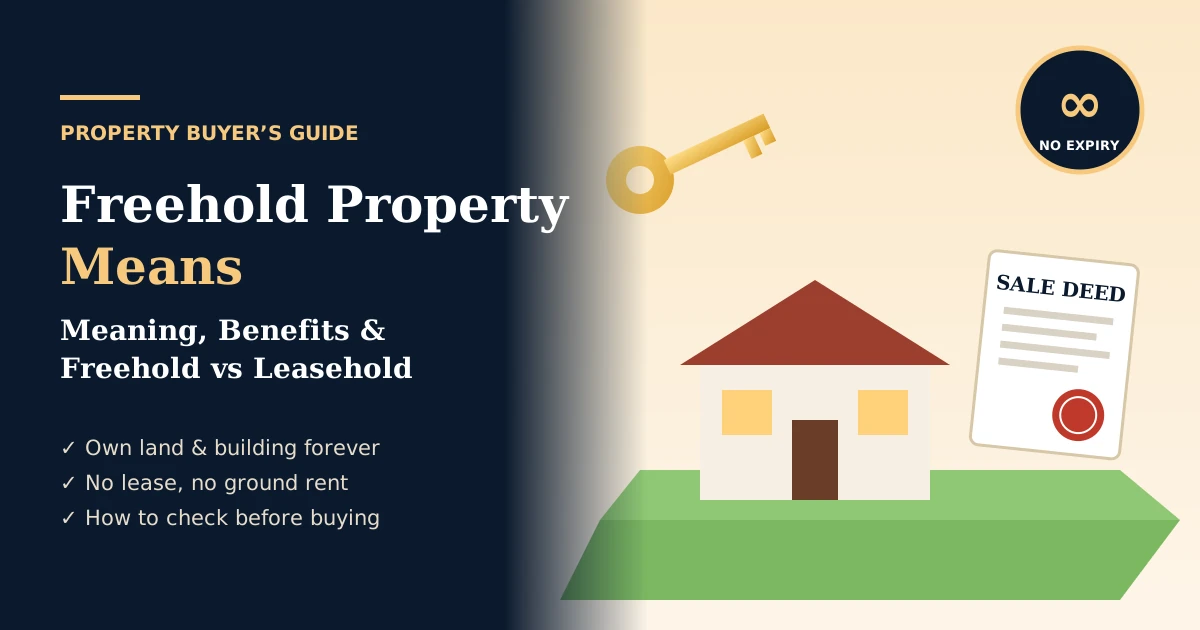
Freehold property means you own both the land and the building on it permanently, with no time limit. You don’t pay ground rent or need a landlord’s permission to sell, rent, gift, or pass it on, subject only to local laws and building rules.
When you buy a home or plot, the type of ownership matters as much as the location or price. It decides how long you own the property, what you can do with it, and how easy it is to sell later. This guide explains what freehold property means, how it differs from leasehold, and why it matters for buyers in India.
What Does Freehold Property Mean?
Freehold property means absolute ownership. The owner holds full legal rights over the land and everything built on it, for an unlimited period. The property is registered in the owner’s name through a sale deed, and ownership continues until the owner sells, gifts, or transfers it, or passes it on through inheritance.
Key Features of Freehold Property
- Ownership of land and building: You own the structure and the land beneath it.
- No expiry date: Ownership lasts forever, with no lease period to renew.
- No ground rent: You don’t pay yearly rent to a government body or landlord.
- Freedom to transfer: Sell, gift, rent, or mortgage the property without outside permission.
- Passes to heirs: The property can be inherited by your legal heirs.
Example: If you buy a villa or a residential plot with a registered sale deed in your name, and the land is not on lease from a government authority, it is a freehold property. You can build, sell, or pass it on to your children whenever you choose.
Freehold vs Leasehold Property: Key Differences
Leasehold property means you own the right to use the property for a fixed period, often 30 to 99 years, while the land belongs to someone else, usually a government development authority or the original landowner.
| Factor | Freehold property | Leasehold property |
| Ownership | Land and building, permanently | Right to use for a fixed lease period |
| Duration | No time limit | Fixed term, often 30 to 99 years |
| Ground rent | None | Yearly or one-time lease rent may apply |
| Selling or renting | No permission needed | May need the lessor’s approval or a transfer fee |
| Home loans | Easier to get | Possible, but banks check the remaining lease period |
| Resale value | Usually higher | Can fall as the lease nears its end |
| Price | Higher upfront | Often lower upfront |
Which is better, freehold or leasehold?
For most homebuyers, freehold is better because it gives permanent ownership, more freedom, easier loans, and stronger resale value. Leasehold can work if the lease is long, the price is much lower, or the location is otherwise unavailable as freehold, but always check the remaining lease period and transfer conditions.
Benefits of Freehold Property
- Permanent ownership: The property is yours forever, with no lease to renew or expire.
- Full control: Renovate, rebuild, rent, or sell without needing permission from a lessor (within local building rules).
- Better resale value: Buyers prefer freehold, so it’s usually easier to sell at a good price.
- Easier home loans: Banks are more comfortable lending against freehold property.
- Inheritance: It passes smoothly to your legal heirs.
- No ground rent: You avoid recurring lease rent.
Disadvantages of Freehold Property
- Higher purchase price: Freehold homes and plots usually cost more than leasehold ones.
- Higher upfront costs: Stamp duty and registration are paid on a higher property value.
- Full responsibility: You handle all maintenance, repairs, and property taxes yourself.
- Legal checks still needed: Freehold doesn’t guarantee a clean title, so you still need to verify documents carefully.
How to Check If a Property Is Freehold
Before you buy, confirm the ownership type with these documents:
- Sale deed: Should show an outright sale to the seller, not a lease agreement.
- Title chain (30 years): Confirms clear ownership passed from one owner to the next.
- Encumbrance certificate (EC): Shows there are no loans, mortgages, or legal claims on the property.
- Patta and chitta (Tamil Nadu): Land revenue records showing the owner’s name.
- No lease deed or allotment letter: If the land was allotted on lease by a development authority or industrial body, it’s likely leasehold.
- Approvals: CMDA or DTCP layout approval and RERA registration for new projects.
Always have a property lawyer review these documents before you pay any advance.
Can Leasehold Property Be Converted to Freehold?
In some cases, yes. Certain government authorities allow leasehold properties to be converted to freehold by paying a conversion fee. The rules, eligibility, and charges vary by state and authority, so check with the relevant development authority before buying a leasehold property on the assumption that it can be converted.
Why Freehold Matters When Buying Plots and Villas in Chennai
For plots and villas, freehold ownership is especially valuable because most of the long-term value lies in the land. Owning the land permanently means you benefit fully from appreciation as areas like ECR, OMR, and Padappai continue to grow. It also gives you the freedom to build, extend, or sell whenever you choose.
Final Thoughts
Freehold property means complete, permanent ownership of both the land and the building. For most buyers, it offers more freedom, security, and long-term value than leasehold. Before you buy, always verify the sale deed, title chain, and approvals with a lawyer.
Looking for freehold properties in Chennai? Explore Adityaram Properties approved developments, from palace-themed villas on ECR to gated plots in Padappai, all with clear titles and full land ownership.
Frequently Asked Questions
What does freehold property mean in simple words?
Freehold property means you own the land and the building forever. There’s no lease period, no ground rent, and no need for anyone’s permission to sell or transfer it.
Is it good to buy freehold property?
Yes. Freehold property is usually the better choice for homebuyers because it offers permanent ownership, easier home loans, and stronger resale value.
What are the disadvantages of freehold property?
Freehold property usually costs more upfront, carries higher stamp duty and registration costs, and makes the owner fully responsible for maintenance and property taxes.
What is the main difference between freehold and leasehold?
With freehold, you own the land and building permanently. With leasehold, you only have the right to use the property for a fixed period, while the land belongs to someone else.
Which one is better, freehold or leasehold?
Freehold is better for most buyers because of permanent ownership and better resale value. Leasehold may suit buyers who want a lower price and are comfortable with a long remaining lease.
Is an apartment freehold or leasehold?
An apartment can be freehold. In a freehold apartment, you own your flat along with an undivided share (UDS) of the land. Check the sale deed to confirm the ownership type.